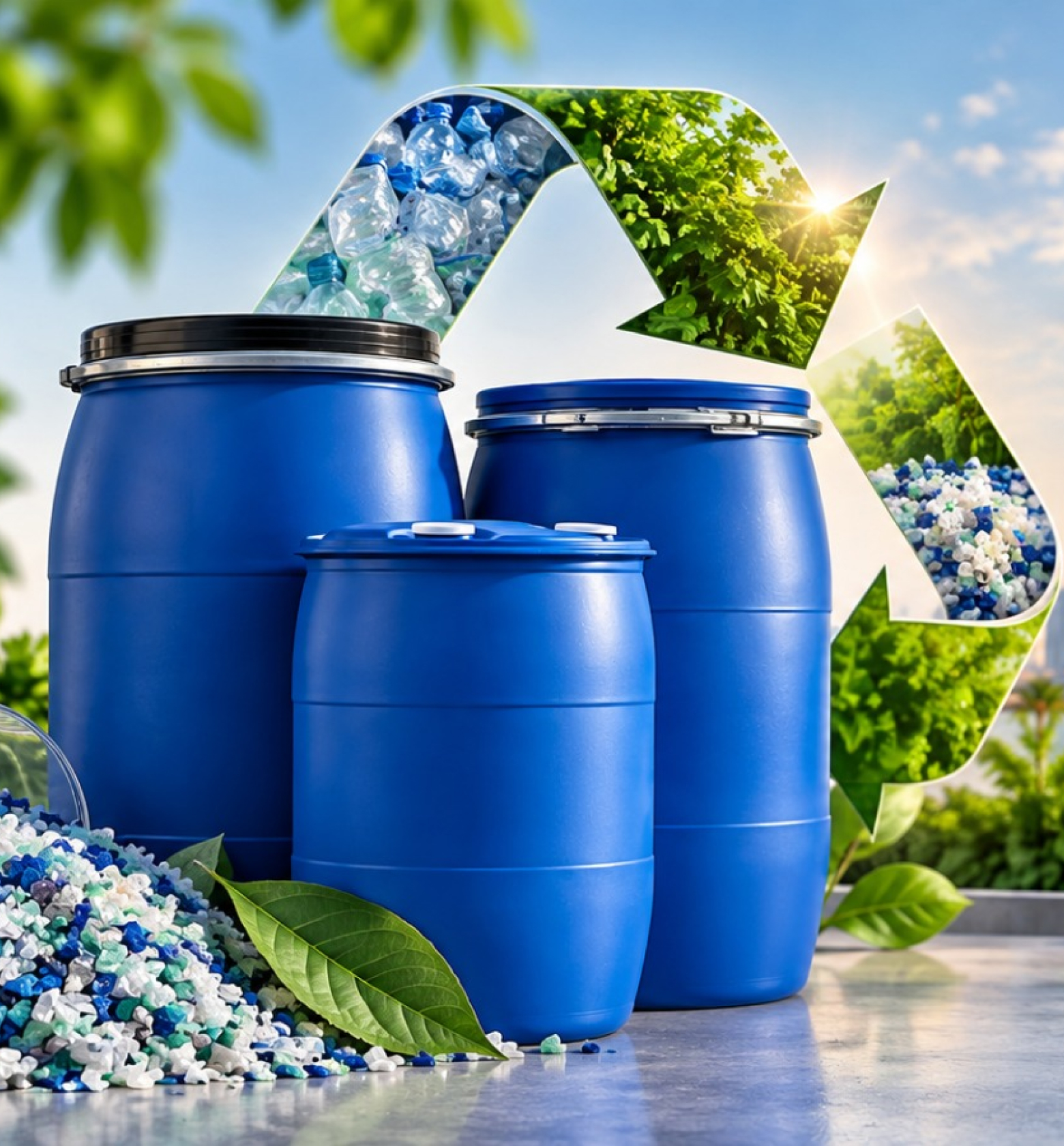


The packaging industry is entering a new phase of material innovation. As businesses reassess their environmental impact, the focus is moving beyond conventional packaging efficiency towards greater resource circularity, responsible material selection and lifecycle performance. PCR plastic packaging is emerging as one of the practical solutions supporting this transition.
For industrial packaging, however, sustainability cannot be considered in isolation. Packaging must continue to meet demanding requirements for strength, product protection, handling, transportation and regulatory compliance. The real opportunity lies in integrating recycled materials into packaging systems without compromising the performance expected by industry.
From Linear Consumption to Material Circularity
Traditional plastics manufacturing largely follows a linear model: raw materials are converted into products, products are used, and the resulting waste is discarded or, where infrastructure permits, recycled.
A circular economy for plastics seeks to retain the value of these materials for longer by recovering, processing and reintegrating them into new applications.
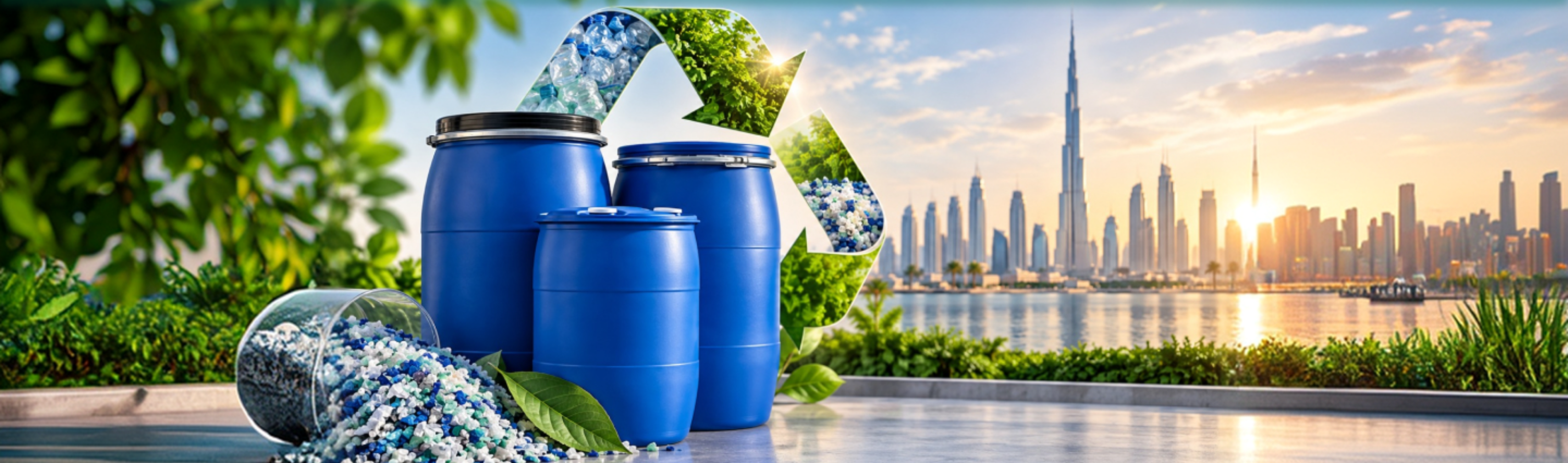
Post Consumer Recycled Plastic, commonly referred to as PCR, is central to this approach. PCR is derived from plastic that has already been used and subsequently collected and processed for incorporation into new products.
Instead of relying exclusively on virgin polymer for every new packaging application, manufacturers can incorporate suitable recycled material into carefully engineered structures.
This creates a connection between recycling and manufacturing — allowing recovered resources to re-enter the product lifecycle.
Understanding the Carbon Footprint of Plastic

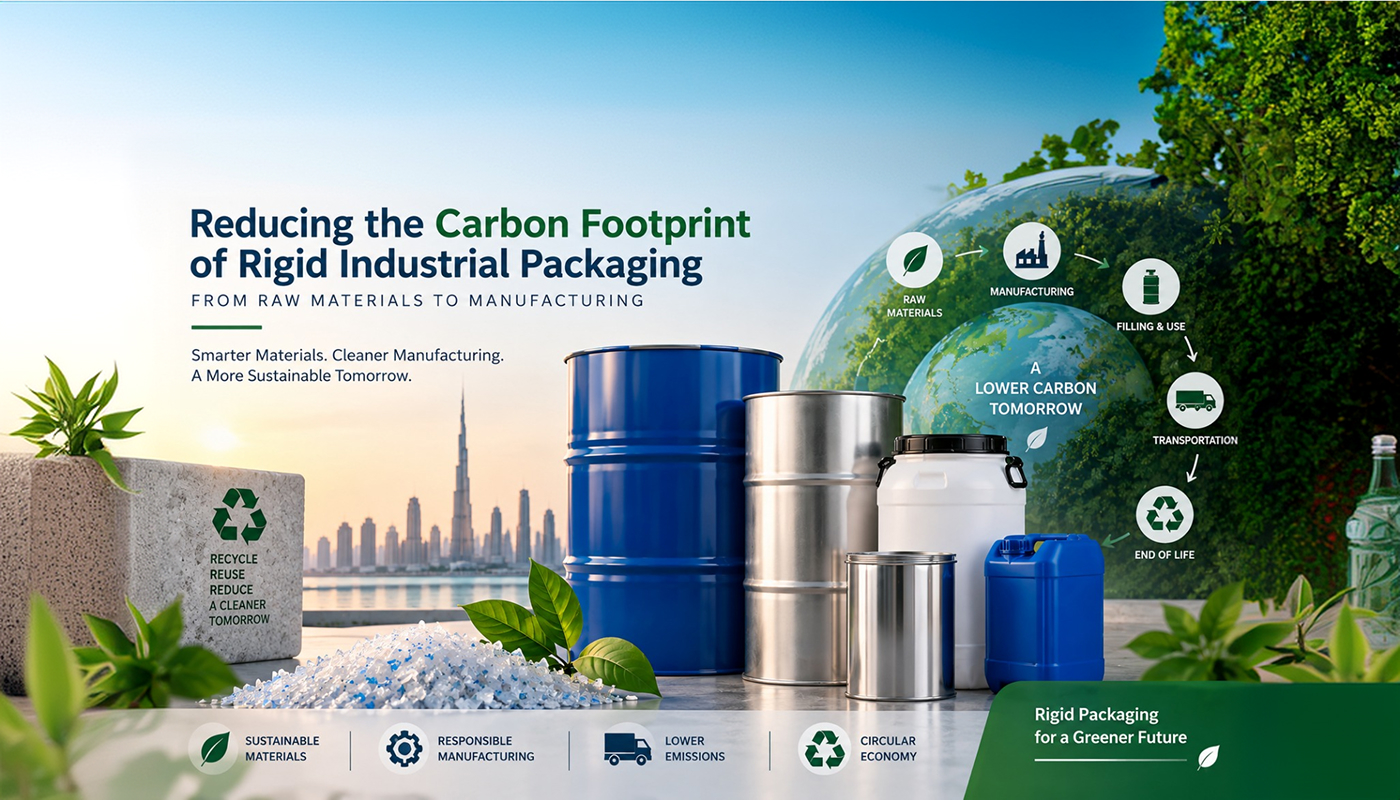
The carbon footprint of plastic is influenced by multiple stages of its lifecycle. These include the production of raw materials, polymer processing, manufacturing, transportation and end-of-life management.
Virgin plastic production requires new feedstocks and energy-intensive processing. Introducing recycled material into appropriate packaging applications can reduce the requirement for virgin polymer and may contribute to a lower lifecycle environmental impact, depending on the material, manufacturing process and energy mix involved.
This is why PCR should be considered within a broader lifecycle assessment rather than viewed as an automatic measure of carbon reduction.
For businesses looking to reduce carbon footprint, the more meaningful question is how material selection, package design, manufacturing and end-of-life management work together to improve overall resource efficiency.
Engineering PCR into Industrial Packaging
The application of recycled material becomes particularly significant when packaging is designed for demanding industrial environments.
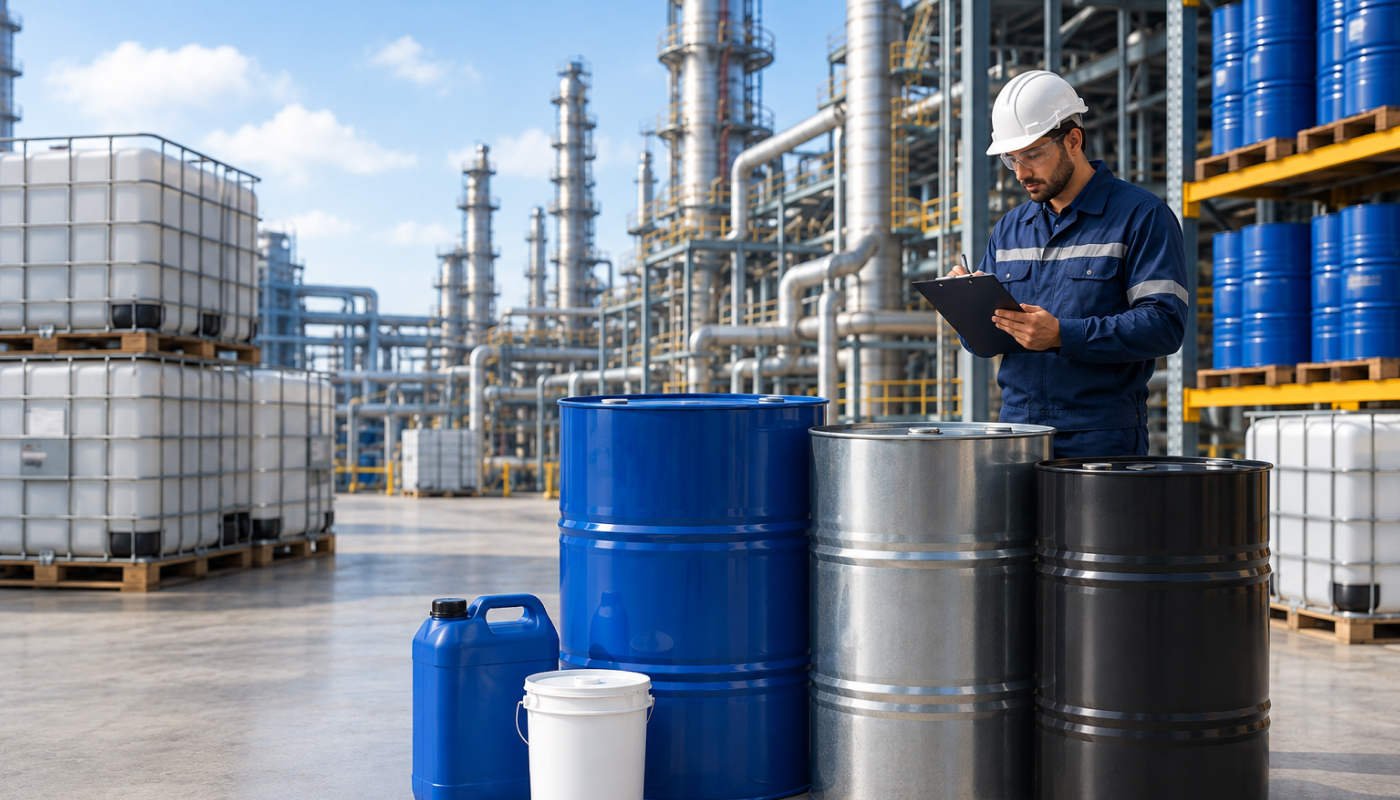
Industrial drums and containers must protect their contents through filling, storage, handling and transportation. Depending on the application, they may be used for chemicals, lubricants, detergents and other products where packaging integrity is essential.
Balmer Lawrie (UAE) LLC has developed three-layer plastic drums incorporating PCR (post-consumer resin) and process regrind within the middle layer of the drum structure.
This multilayer approach illustrates how recycled material can be integrated into an engineered packaging solution rather than simply substituted for virgin material throughout the entire structure.
The result is a packaging format that brings recycled content into consideration while maintaining the functional requirements associated with industrial applications.
Why Multilayer Construction Matters
Material engineering is increasingly important in the development of sustainable packaging.
A multilayer structure can allow different layers to fulfil different functional roles. In applications where recycled material is suitable for incorporation into an internal layer, manufacturers can introduce recycled content while designing the overall package around its required performance characteristics.
This approach reflects a broader shift in packaging design: sustainability is becoming an engineering consideration from the beginning of product development.
For industrial customers, this matters because environmental objectives must remain aligned with operational requirements. A packaging solution that reduces material impact but fails to protect its contents does not deliver a sustainable outcome.
PCR and the Circular Plastics Value Chain
Recycling does not end when plastic waste is collected.
A functioning circular system requires recovered materials to have viable applications and consistent demand. This is where manufacturers play a critical role.
By incorporating suitable recycled feedstocks into new products, manufacturers can help create demand for recovered plastics and strengthen the connection between plastic waste recycling and industrial production.
This contributes to the wider Sustainability Circular Economy by keeping materials within productive use and reducing the dependence on newly sourced resources.
However, circularity also requires consideration of collection systems, material quality, processing technologies and end-of-life pathways. No single stage can create a circular system on its own.
Sustainability Must Start With Performance
For industrial packaging, sustainability cannot replace quality.
The packaging must be appropriate for the product it contains and capable of performing throughout its intended lifecycle. Material selection therefore needs to take into account product compatibility, mechanical performance, handling conditions, storage requirements and transportation.
This makes the role of experienced Recycled Plastic Manufacturers particularly important.
The integration of recycled content requires knowledge of material behaviour, manufacturing processes and quality control. Consistency is essential, particularly when packaging is used in demanding industrial supply chains.
At Balmer Lawrie (UAE) LLC, this approach is supported by established quality and environmental management systems, including ISO 9001:2015 and ISO 14001:2015 certifications, together with ISO 45001:2018 for occupational health and safety.
A Strategic Consideration for UAE Businesses
Dubai's position as a major industrial, logistics and trade hub places packaging at the centre of diverse regional and international supply chains.
For businesses operating in the UAE, sustainability considerations are increasingly extending into procurement and packaging decisions. Customers and supply-chain partners are looking more closely at material efficiency, environmental responsibility and the lifecycle of the products they purchase.
PCR-containing packaging can form part of this transition where the material and application are technically appropriate.
Rather than treating sustainability as a separate initiative, businesses can incorporate it into packaging specifications alongside quality, safety, logistics and performance requirements.
Looking Beyond Recycled Content
While PCR is an important development, recycled content represents only one element of sustainable packaging.
A comprehensive approach considers the entire packaging lifecycle:
- Material sourcing and composition
- Manufacturing efficiency
- Packaging weight and resource consumption
- Product protection
- Transportation and storage
- Durability and service life
- Reuse opportunities
- Recycling infrastructure
- End-of-life management
The most appropriate packaging solution is therefore determined by the application and its complete lifecycle, not by recycled content alone.
This perspective allows businesses to make sustainability decisions based on measurable performance rather than isolated environmental claims.
The Future of Industrial Plastic Packaging
The next generation of sustainable packaging will be defined by material efficiency and intelligent design.
The industry is moving towards packaging solutions that consider recycled feedstocks, manufacturing efficiency, product protection and end-of-life pathways as interconnected elements.
PCR plastic packaging has an important role within this evolution. By bringing post-consumer material back into manufacturing, it can support more circular use of resources while opening new possibilities for industrial packaging design.
For manufacturers and packaging users alike, the objective is not simply to use more recycled material. It is to develop packaging that delivers the right balance of performance, quality, resource efficiency and circularity.
That is the direction in which sustainable industrial packaging is evolving — from a focus on individual materials towards a more sophisticated understanding of the complete packaging lifecycle.
For businesses seeking to reduce their environmental impact without compromising industrial performance, this shift represents not just a sustainability opportunity, but a significant step towards the future of packaging.
Frequently Asked Questions
- Can PCR plastic packaging be customized for different industrial applications?
Yes. Industrial packaging can be designed around the specific requirements of the product, including container format, capacity, closure configuration, colour and other packaging specifications.
- What capacities are available for Balmer Lawrie plastic drums?
Balmer Lawrie offers plastic drums in capacities including 200, 220, 235 and 250 litres, with different configurations available depending on the packaging requirement.
- How should companies evaluate the sustainability of industrial packaging?
Companies should look beyond a single sustainability attribute and assess factors such as recycled content, material efficiency, product protection, manufacturing processes, transportation, service life and end-of-life options.
- What makes multilayer plastic drums relevant to sustainable packaging?
Multilayer construction provides manufacturers with greater flexibility in how different materials are incorporated into a packaging structure. This can enable recycled material to be integrated into appropriate layers while the overall package is engineered for its intended industrial application.
- How can businesses transition towards more sustainable industrial packaging?
A practical transition can begin by reviewing current packaging specifications, identifying suitable applications for recycled content, assessing lifecycle impacts and working with packaging manufacturers capable of meeting both sustainability and performance requirements.